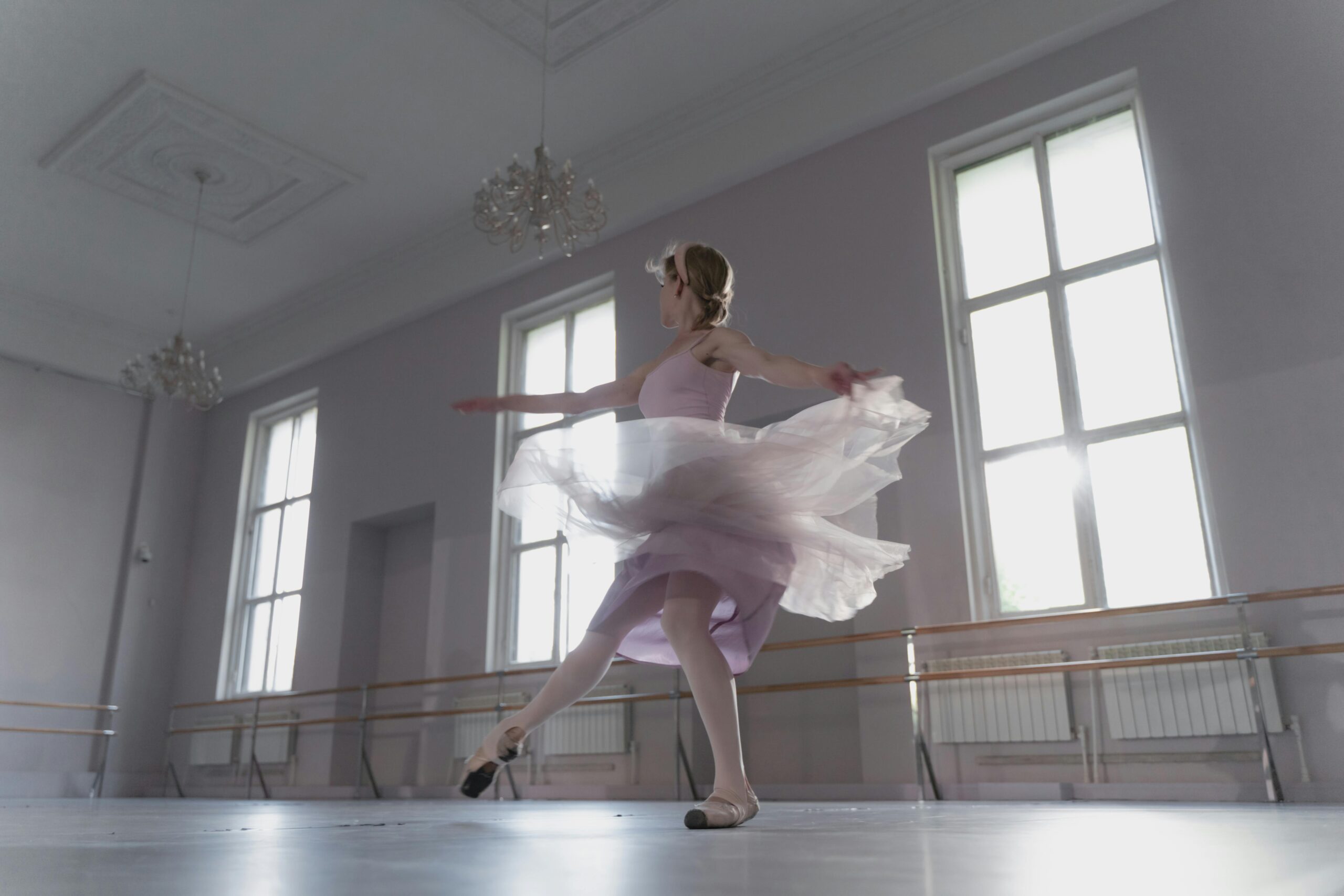
A pirouette can look effortless, but it’s really a moving balance challenge. When your centre is stable, your working leg can arrive cleanly to passé, your supporting side can stay lifted, and your rotation has somewhere “quiet” to live. That’s why ballet core strength matters so much: it supports your alignment, helps you control the speed of the turn, and makes the finish feel organised rather than accidental.
If you’ve ever felt like your spot is fine but your body still wobbles, it’s often not a “turning” problem at all. It’s a support problem.
Understanding the Core in Ballet
In ballet, “core” isn’t just about front-of-the-stomach muscles. Think of it as a 360° corset that supports your spine and pelvis while you move your limbs freely. The key players include your abdominals (for lift and control), obliques (for rotation and stability), lower back muscles (for upright support), and pelvic floor (for deep, subtle stability). When these work together, you can keep your ribs stacked over your pelvis and maintain length through the supporting side – two essentials for consistent turns.
This is also why core work for dancers should feel precise rather than aggressive. You’re training coordination and control, not trying to “brace” and freeze.
Common Pirouette Challenges Related to Core Weakness
When the core doesn’t fully supBlog 1
Task: Upload and publish Blog 1 on the BWI website.
Asana Task Link: https://app.asana.com/1/240153038112231/project/1208473593315373/task/1212253979249934?focus=true
Status: Written on Monday 15th Decemberport you, your body will look for stability elsewhere – and that’s where turns start to unravel. Common signs include:
- Wobbling in relevé: your pelvis shifts, your ribs pop, or your shoulders twist to compensate.
- Incomplete rotations: you start well, but lose your axis mid-turn and run out of rotation.
- Falling out of the finish: the final position isn’t held because the centre “switches off” as you land.
- Tension in the neck/shoulders: when the core isn’t doing enough, the upper body often tries to take over.
If any of this sounds familiar, improving your ballet pirouette technique may start with making your centre more reliable.
Core Strengthening Exercises for Ballet Dancers
The best core exercises for ballet build strength without bulk by focusing on long lines, steady breathing, and control. Try adding a small circuit a few times a week (or even 8–10 minutes after class):
- Forearm plank (ballet version) – Aim for a long spine: shoulders away from ears, ribs gently knit, pelvis neutral. Think “lift” rather than “push”. Start with 20–30 seconds, repeat 2–3 times.
- Side plank (for obliques and turnout stability) – Keep the hips stacked and the top side lifted. If the full side plank is too much, lower the bottom knee and build from there.
- Dead bug (deep control without gripping) – On your back, knees over hips, arms to ceiling. Extend the opposite arm/leg slowly without letting the ribs flare. This teaches you to move limbs while the centre stays calm – very pirouette-friendly.
- Pilates-inspired single-leg stretch – Keep the pelvis heavy and stable while the legs move. Move slowly enough that you can maintain control and breath.
- Controlled leg lifts (low range, high quality) – Lying on your side or back, keep the torso steady and lift the leg only as high as you can without tipping the pelvis. The goal is stability first, height second.
If you’d like a guided approach, Isabella’s Dancer Core class is a great place to start building consistent strength and control.
Integrating Core Work into Daily Ballet Practice
Core work doesn’t have to live in a separate “workout” box. A little core training for dancers inside your usual ballet routine can be surprisingly effective.
- At the barre: add a quiet core focus to relevés (think ribs over pelvis), and hold passé balances for 6–8 slow counts without gripping your shoulders.
- In centre: before turns, practise a clean preparation with a steady torso – no rib flare, no hip hike.
- At home: pair 2–3 core exercises with gentle mobility. Consistency beats intensity every time.
For more on why this matters across all your techniques (not just turning), see Why a strong core is essential for every ballet dancer.
Tips for Maintaining Core Engagement During Pirouettes
Core strength helps, but you also need the skill of switching it on at the right moment – especially in the preparation and the landing.
- Posture and alignment: imagine your spine lengthening upward as your tailbone drops down. It’s a lift-and-length sensation, not a squeeze.
- Breathing: try a soft exhale as you initiate the turn. Many dancers hold their breath, which can create tension and throw off balance.
- Spotting: spot with the head, but keep the ribs quiet – avoid “throwing” the upper body around.
- Preparation: in fourth (or fifth), feel your weight centred over the supporting foot before you turn. If you’re already off-axis, the core can’t rescue you mid-spin.
If you want a deeper, more focused progression, the Deep Core class is designed to help you find that steadier, more connected support.
Progressions for Advanced Dancers
Once the basics feel stable, you can challenge endurance, speed control, and the ability to stay organised through multiple turns.
- Plank to passé balance: hold a short plank, then stand and immediately hold passé on relevé (each side). This trains the quick core “switch-on”.
- Slow-motion pirouette prep: take the preparation painfully slowly, keeping everything stacked. If you can control it slowly, you’ll control it at tempo.
- Multiple-turn endurance sets: practise 2–3 turns with a clean finish, rest briefly, repeat. Your goal is the same quality each time, not just chasing numbers.
For targeted training that supports both technique and stamina, Ballerina Core is a brilliant next step.
Strong Core, Stronger Turns
Pirouettes don’t improve through turning alone. When your centre is strong and coordinated, your body stays aligned, rotation feels cleaner, and the finish becomes something you can trust. Over time, consistent core work can also reduce strain in the lower back and hips, making your training feel better as well as look better.
Keep it simple: a few focused exercises, woven into your week, plus mindful engagement in class. Your turns will start to feel less like a gamble – and more like a skill you can repeat on cue.