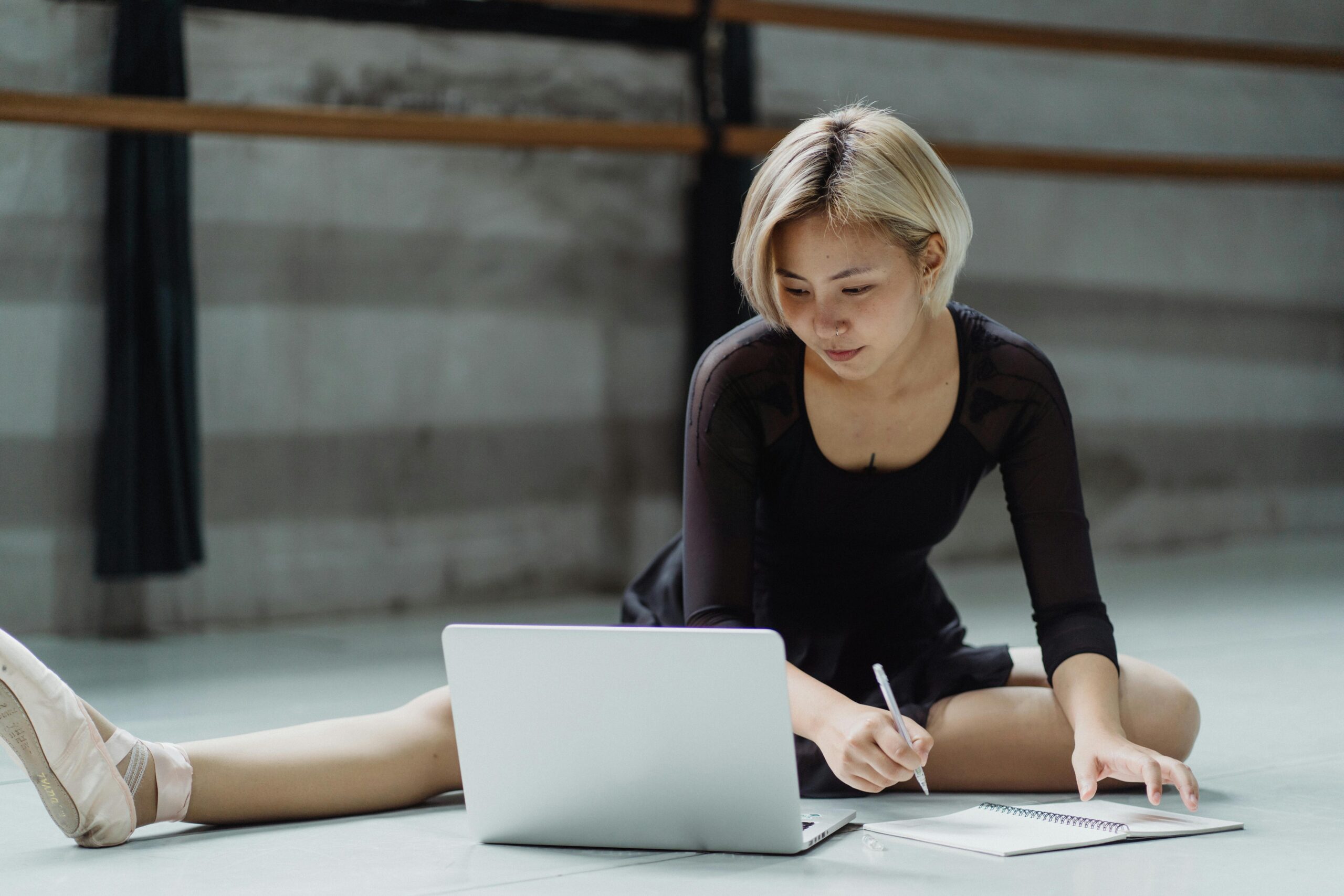
Why cooling down is essential for dancers
As the last note is struck and class is finished, it’s simple enough to head for the door. But finishing strong isn’t simply about nailing your final révérence, it’s also about being gentle with your body afterward. A ballet cool down is the easing into rest after intense movement, the gliding of your muscles and joints into stillness. Without cool-downs, you’re more apt to be stiff, sore, or even hurt yourself. With it, you set yourself up for faster recovery, tighter technique, and longevity in dancing.
At Ballet with Isabella, we prefer to encourage dancers to treat cool-downs as being just as vital as warm-ups. They are a gesture of respect for your body, the vehicle through which you get to make art daily.
What happens to your body after ballet class
Ballet is physically stressful. From aggressive jumps to sustained balances, your muscles are in constant switching between power and control. You are left with an elevated heart rate, lactic acid still in your muscles, and your joints even compressed due to all the active movement. If you stop everything and discontinue practicing immediately, your body is forced into rest with no transition time. This will leave you sore, tight, or even vulnerable to overuse injuries.
An effective cool-down enables your body to release tension, restore circulation, and condition for the next session. It’s about giving your muscles closure so they can repair stronger.
The key benefits of a proper cool-down
- Prevention of injury: Slowing down stretches protects your muscles from tears and strain.
- Less stiffness: Removing lactic acid from the muscles decreases tomorrow’s discomfort.
- Greater flexibility: Muscles lengthen more effectively after being warmed up.
- Better alignment: Mindful stretching helps you maintain good posture and balance.
- Psychological reboot: Cooling down helps you wind down your mind, leaving class with a less anxious state of mind.
That is, all that extra 10–15 minutes of focus now saves you hours of anxiety later.
Step 1 – Gentle cardio to lower the heart rate
As you fall into stretches, your heart rate should slow down gradually. A walking tour of the studio or a series of slow pliés will do. Consider this phase as landing gradually. You have to decrease the level of movement without relaxing the body. This is the bridging phase from grand allegro into stillness, with time to allow for your muscles to adjust.
Step 2 – Static stretches for flexibility
With your breathing more relaxed, it is now time to stretch out the muscles. Ballet cool-down stretches need to target the entire body, not just the legs.
- Hamstrings: Sit on the floor with one leg extended in front of you, bend forward, and try to grab your toes. This helps recover after jumps and développés.
- Quads: Stand up, bring one foot towards the glutes, and have parallel knees. This neutralises all the battements and pliés.
- Calves: Place your hands against the wall, step one foot back into a lunge, and press down on your heel. Calves work harder in pointe work and need to be paid special attention.
- Back and shoulders: Open the chest with a doorway stretch, or bring knees to your chest on the floor to release the spine.
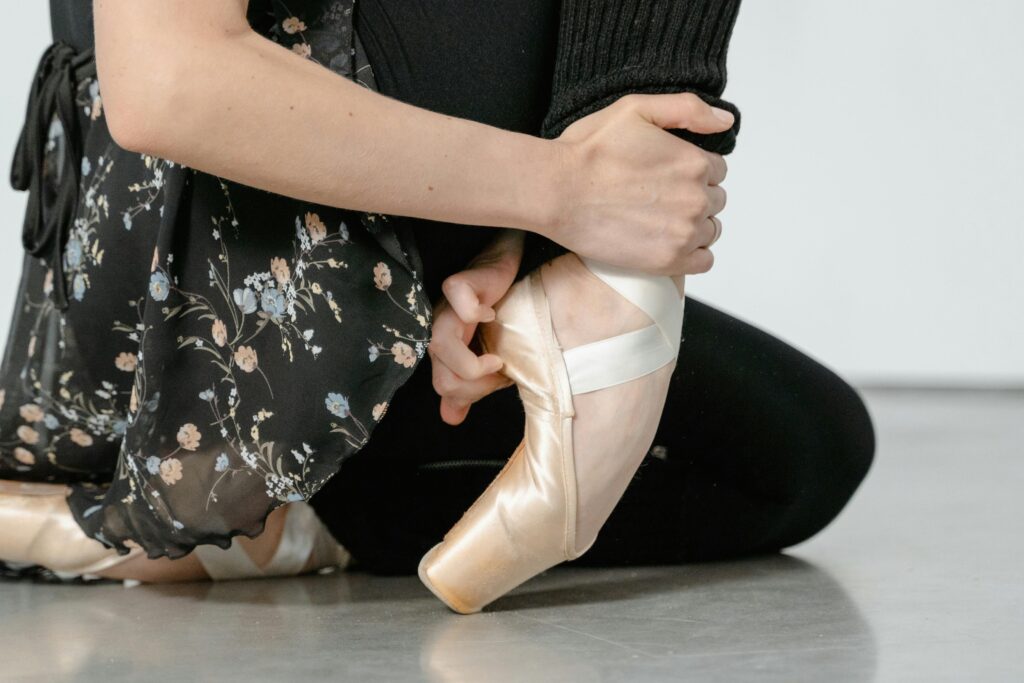
- Feet: Wrap a resistance band around your toes and gently press through demi-pointe, then release. Ballet requires firm, flexible feet.
Static stretches, for 20–30 seconds each, permit muscles to lengthen and recover. They’re not pushing to the extremes, they’re making space.
Step 3 – Mobility exercises for joints
Flexibility is necessary but not sufficient. Healthy joints need gentle mobility too. Try these cool-down exercises for dancers to keep your joints flexible:
- Ankles: Slowly circle the ankles in both directions, keeping the movement controlled.
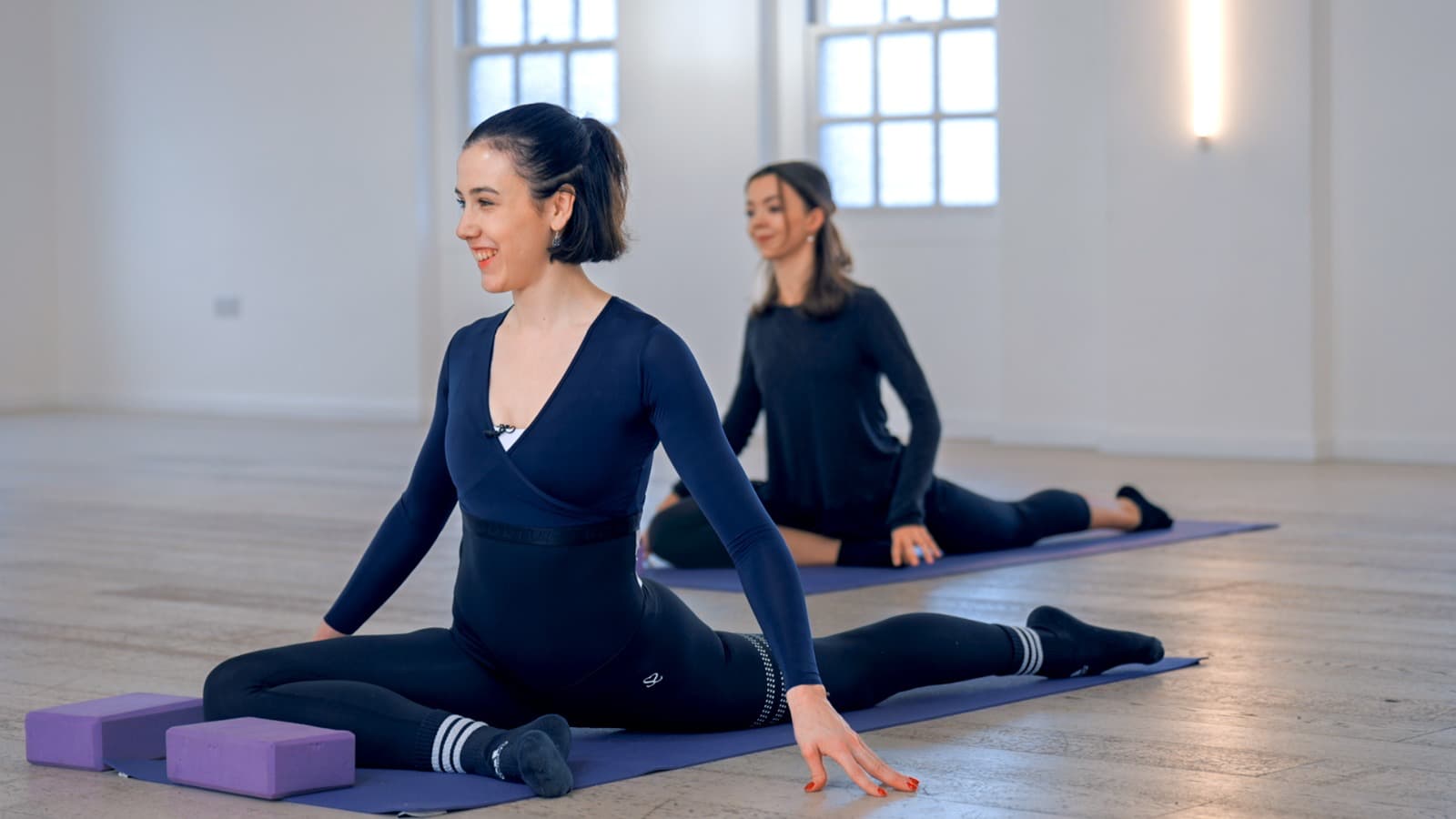
- Hips: Rock slowly forward and backward from a lunge position to loosen the hip flexors.
- Shoulders: Roll shoulders gradually in circles backward to unlock tension.
Mobility keeps your joints stable and prepares them for practice the next day, whether it’s pirouettes or pointe work.
Step 4 – Breathing and relaxation techniques
After physical work comes mental release. A child’s pose, or lying on your back with knees up to your chest, is a great finishing position. Close your eyes, breathe slowly in and out, and notice each breath. This not only decelerates your heart rate but also enables you to tune in to places of tension that need to be released.
Some people prefer to incorporate mindfulness here, a brief mental picture of the class, recognising both the successes and the areas to work on. By creating space for relaxation, you’re carrying less tension with you into your evening and sleeping better as well.
Common cool-down mistakes to avoid
It’s easy to skip or speed through a cool-down, but that’s when the injuries sneak in. Here are some common mistakes to be on the lookout for:
- Skipping it entirely: Even five minutes is better than nothing.
- Overstretching: Pulling too hard on cold or tired muscles can do more harm than good.
- Bouncing in stretches: Always stretch statically, bouncing risks micro-tears.
- Neglecting certain areas: Remember, ballet uses the whole body. Don’t just focus on your splits, give equal care to your back, shoulders, and feet.
By avoiding these mistakes, you’ll make your cool-down for dancers both safer and more effective.
Making cool-down a habit
A proper cool-down doesn’t have to be complicated. What matters is consistency. Just like showing up to class ready to work, showing up for your body afterwards is part of professional discipline. Over time, your muscles will recover faster, your flexibility will improve, and you’ll carry yourself with more ease into each new rehearsal.
If you’re building your training routine, Ballet With Isabella has resources designed to balance challenge and recovery. Explore our Ballet Training Plans for structured progress, or join our Ballet Online Classes where safe practice always includes warm-up and cool-down guidance. And if you’re doing challenging work, such as the Ballet Bootcamp, incorporating cool-downs into your routine as non-negotiable is what prevents you from getting injured.
Keep in mind: what you do after class is an investment for dancing tomorrow. Approach your cool-down as a calm celebration of what you just accomplished, a moment to express gratitude to your body before you make it do it all over again.
Need additional guidance? Visit the Studio hub for everything you need to keep your ballet path strong, safe, and inspired.