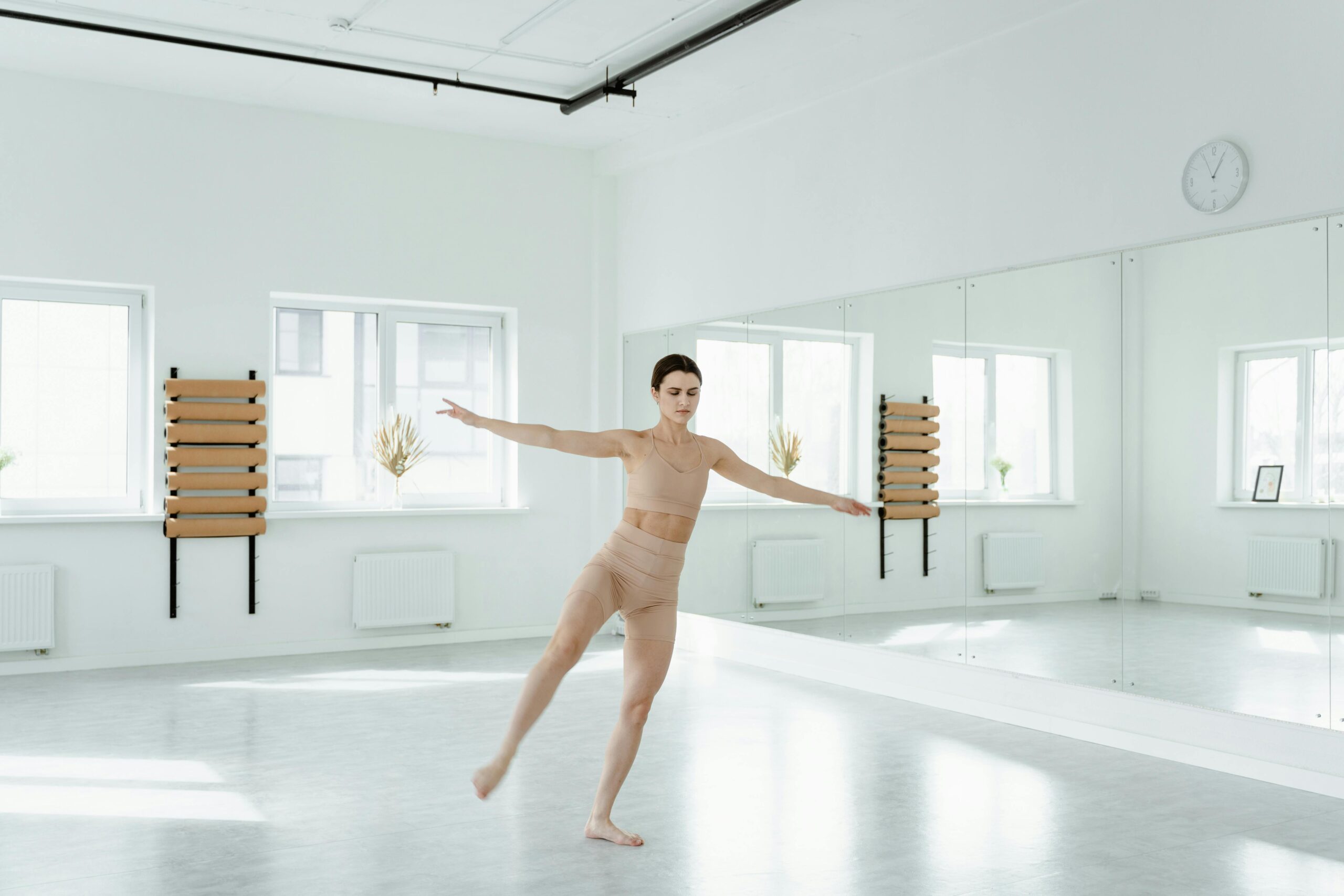
The Art of Expression Through Arms
You might think of flying leaps or endless turns when you think of ballet. Yet one of the most compelling things in a performance is really something much more subtle, the way a dancer holds his or her arms. The positioning of the arms, port de bras, gives shape and life to movement. It frames the body, deepens storytelling, and adds elegance to even the simplest step. Whether you’re just starting out or already dancing at an advanced level, working on your port de bras is one of the most rewarding aspects of training.
What is Port De Bras in Ballet?
Port de bras is simply “carriage of the arms” in French. In ballet, the phrase is both used to explain the positions of the arms and the way the arms transition from one position to another. At its best, port de bras is flowing: the energy originates in the back, moves through the shoulders, down the arms, and out through the fingertips. Arms can create long, harmonious lines that bring balance and depth to expression. Historically, teachers developed port de bras to bring artistry into technical exercises as a reminder that ballet is never just about feet and legs.
Why Port De Bras Matters For All Levels of Dancers
Port de bras is not something that you can leave until later in your training. Beginners are taught basic arm positions along with first steps, as even a plié is not finished without correctly positioned arms. At an intermediate level, dancers start to focus on fluidity, making transitions as lovely as the positions themselves. At an advanced level, dancers achieve artistry, shaping their port de bras to suit the mood of a variation, or even to characterise. That’s the beauty of it, ballet port de bras grows with you, evolving with your level and improving with your technique.
Common Mistakes in Port De Bras
While port de bras is simple, there are numerous ways that it may go wrong. One of the most common faults is allowing the elbows to drop or collapse, which interferes with the line of the arm. One is stiff, doll-like wrists, which makes movements mechanical instead of fluid. Overextended fingers or protruding thumbs (sometimes called “hamburger hands”) will also spoil the line. And perhaps the most fundamental error is forgetting that port de bras starts in the back, disconnected shoulders instantly cause the arms to appear heavy instead of light. The encouraging news is that all of these tendencies can be undone with mindful practice.
Tips For Improving Grace and Fluidity
Improving your port de bras does not involve forcing the arms into position, but connecting them to the rest of the body. The following are some simple yet useful tips:
- Engage the back. Think of your arms as extensions of your back muscles, not just your shoulders. This gives them strength and control.
- Relax the hands. The hands finish the line of the arms, with energy flowing out through the fingertips without strain.
- Breathe with the gesture. Inhale as the arms rise, exhale as the arms come down. Breathing renders the arms fluid and musical.
- Look for continuity. Even in static positions that are held, the arms must be alive, as if energy is flowing through them.
Rehearsing this awareness will make your port de bras not feel so much like an addition, but rather a natural extension of your dancing.
Exercises to Strengthen and Refine Port De Bras
Strength is just as desirable as softness in arms. Dancers occasionally avoid arm exercises for fear of looking bulky, but in ballet, strength equals stability and longevity. Try the following port de bras exercises in your practice:
- Slow transitions. Stand upright and slowly move your arms from fifth to second position and back again, focusing on relaxed shoulders. Slowly repeat to build control.
- Full pathway practice. Move the arms through bras bas, first, second, and fifth, never skipping positions. This creates muscle memory for clean lines.
- Back activation. Try to sustain the arms in second position for long counts using your upper back rather than your shoulders. This teaches you where the support really comes from.
- Coordination with pliés. Pair arm movements with fundamental leg work, like demi-pliés, to rehearse upper and lower body coordination.
For further conditioning, a strength and precision-based class, like our Intermediate Barre & Strength class, can aid in your development.
Using Musicality to Elevate Your Port De Bras
Arms can express emotion in a way that words cannot, but only when they are musical. The phrasing of the arms needs to respond to the music, rising and falling with its dynamics. Think of each note imbuing your movement with breath. When the music crescendos, allow the arms to open up. When it softens, allow the arms to dissolve. This synchrony between arms and music does not make movements robotic. Musicality is what gives port de bras ballet life.
Port De Bras Across Ballet Styles
While the fundamentals are shared, arms’ stylisation differs across ballet styles. In the French school, arms tend to be subdued and elegant with a sense of refinement in the air. The Vaganova method, which is Russian, emphasises large, expressive port de bras that dynamise the stage. In contemporary ballet, arms may depart from the classical shapes altogether, exploring freer pathways. For dancers, it’s exciting but difficult to master all these variations. It enriches your tool kit so that you may differ your port de bras arm positions based on various choreographers and styles.
Building Confidence Through Expressive Arms
Mastery of port de bras is not just a matter of looking good in the mirror, but of bringing together your technique and your artistry. Arms can narrate a story, soften a movement, or command attention. And while it will take time and patience to strengthen your back, shape your lines, and coordinate with your breath, every bit of practice brings improvement. Remember, expressive arms are not just for professionals. With consistent practice, you can become confident and find your own artistry in port de bras.
If you’d like to practice shaping your arms with guidance, try our Beautiful Arms class and notice how much your dancing can transform when you give this basic skill some focus. And for an even deeper dive into technique, artistry, and strength, visit the studio and explore classes that feed every aspect of your training.